

Introduction
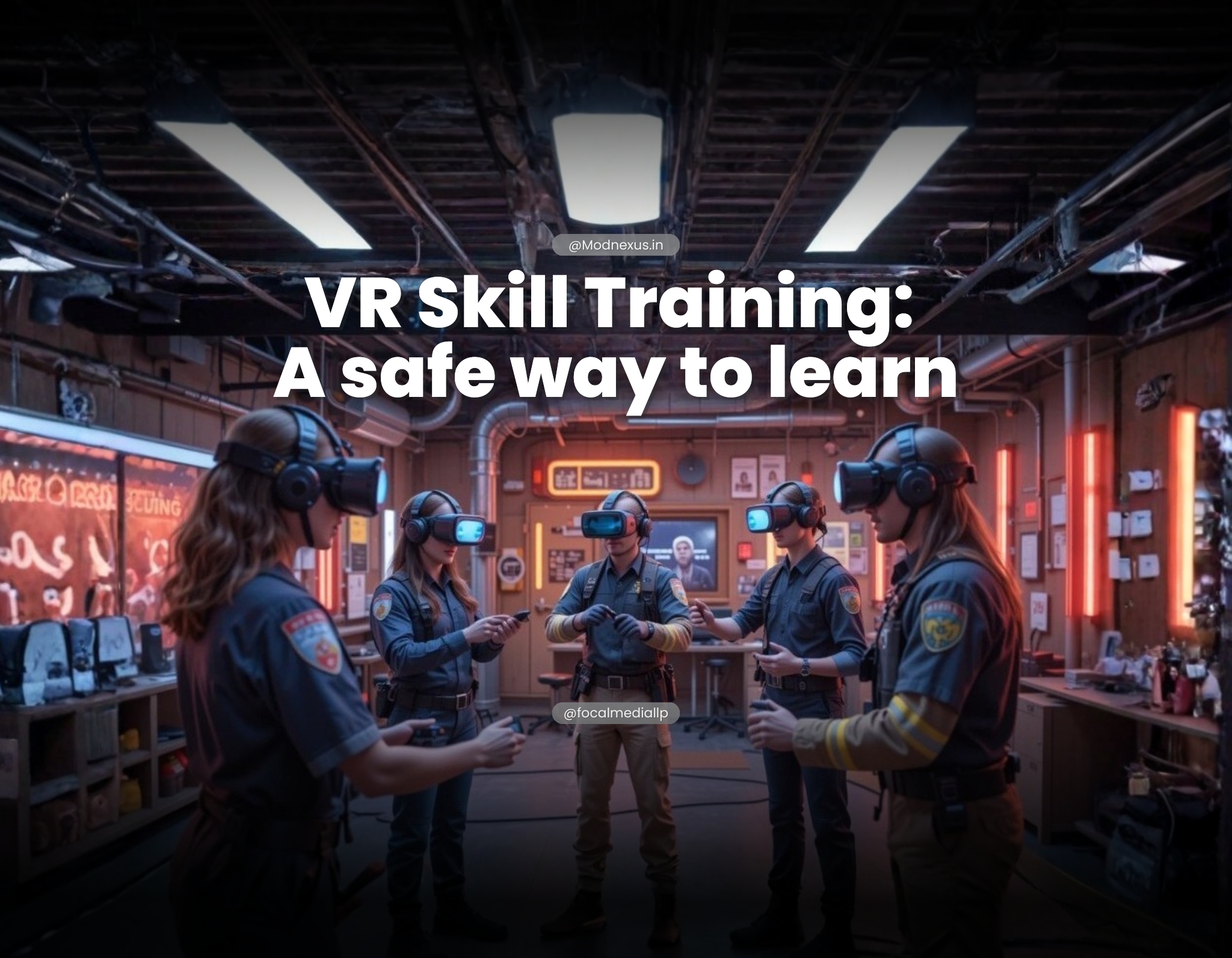
In today’s fast-paced world, learning new skills requires both safety and effectiveness. That’s why VR Skill Training is becoming the preferred method across industries. It offers immersive, hands-on learning without the risks of real-world applications. Whether it’s medical procedures, machinery handling, or customer service scenarios, VR Skill Training creates controlled environments where learners can practice, repeat, and improve confidently.
What Makes VR Skill Training So Effective?
Unlike traditional training methods, VR Skill Training immerses learners in realistic environments that closely resemble real-life situations.
- They interact with virtual tools and objects.
- They learn by doing instead of memorizing.
- They experience real consequences without real danger.
This immersive approach makes VR Training ideal for learners who need practical exposure.
A Safe Space to Make Mistakes
One of the biggest advantages of VR Skill Training is that mistakes have no real-world consequences.
- Trainees can redo tasks as many times as needed.
- They can experiment, explore, and troubleshoot freely.
- They gain confidence before handling real equipment or situations.
This ensures better learning outcomes while reducing workplace risks.
VR Skill Training Builds Real Confidence
Confidence grows when learners know what they’re doing. VR Training helps build that confidence through repetition and instant feedback.
- Learners handle virtual machinery or tools.
- They practice emergency responses.
- They improve speed and accuracy with guidance.
This consistent practice makes people job-ready long before they enter the real environment.
Perfect for High-Risk and Technical Jobs
Some jobs require practice that can’t always be done safely. That’s why industries like healthcare, aviation, manufacturing, and construction rely heavily on VR Skill Training.
- Medical students practice surgeries.
- Factory workers train on heavy machines.
- Drivers practice risky scenarios safely.
- Technicians explore equipment without damage.
By simulating complex tasks, VR Training ensures mastery without danger.
Reduces Training Cost and Time
Traditional training often requires physical setups, instructors, equipment, and travel. VR Skill Training eliminates most of these costs.
- Training becomes accessible anytime, anywhere.
- Institutions don’t need expensive physical materials.
- Learners progress faster with automated guidance.
This makes VR Skill Training cost-effective for both small teams and large organizations.
Personalized Learning for Better Results
Every learner is different, and VR Training adapts to individual needs.
- AI tracks performance and highlights mistakes.
- Learners receive personalized improvement tips.
- Modules can adjust difficulty based on progress.
This personalized approach improves retention and skill mastery.
Better Engagement and Higher Completion Rates
Learning feels more like an experience than a lesson. VR Skill Training increases engagement by keeping learners active and involved.
- They interact directly with objects.
- They complete challenges.
- They stay motivated through gamified tasks.
This leads to higher completion rates and stronger real-world performance.
A Future-Ready Training Method
As technology grows, VR Skill Training will become even more powerful.
- More realistic environments
- AI-powered coaching
- Multi-user group training
- Integration with real-time data
This future-ready approach ensures that learners and organizations stay ahead of industry demands.
Conclusion
VR Skill Training is transforming how people learn by making training safer, smarter, and more immersive. It reduces risks, boosts confidence, and prepares learners for real-world situations with greater accuracy and efficiency.
At ModNexus (https://modnexus.in/), we help organizations build advanced VR Skill Training systems that empower learners and improve performance. Bring the future of training to your team with ModNexus (https://modnexus.in/).