
Introduction
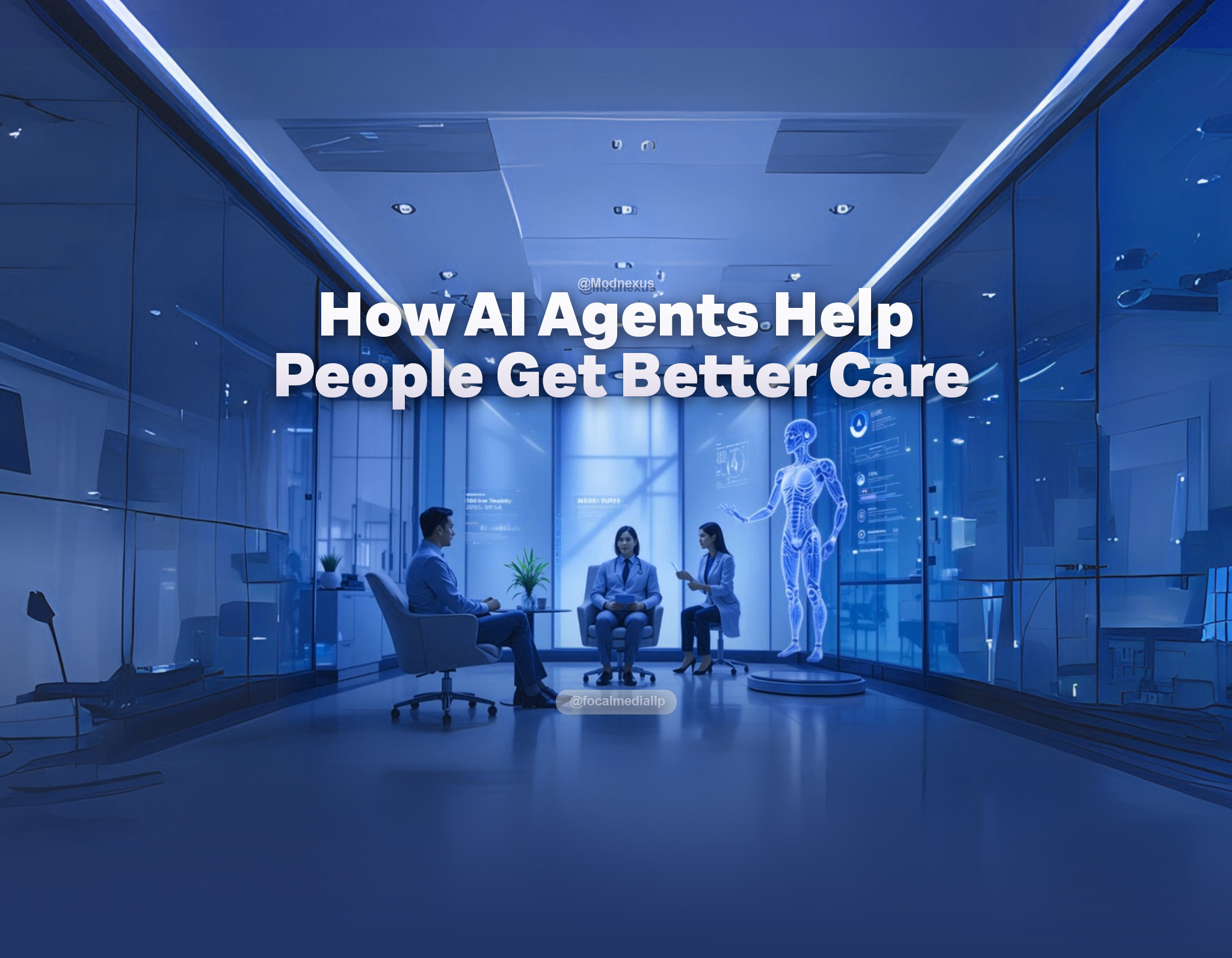
Imagine getting healthcare that understands you, predicts what you need, and guides you every step of the way. AI Agents are making this possible. From hospitals to home care, AI Agents are transforming how people get better care by streamlining processes, providing instant support, and making healthcare more personal than ever.
In this blog, let’s break down how AI Agents work in healthcare, how they help patients and doctors, and why they’re becoming essential for modern care.
What Are AI Agents in Healthcare?
AI Agent is an intelligent digital assistant powered by artificial intelligence. They can process vast amounts of health data, learn from patient interactions, and provide tailored support in real-time. They don’t replace doctors or nurses but help them do their jobs better and help patients feel supported 24/7.
These Agents can handle everything from answering patient queries to monitoring vital signs and reminding patients to take their medication.
How AI Agents Improve Patient Care
1. Instant Answers and Support
Patients often have questions after leaving the doctor’s office. These Artificial intelligence Agents provide instant answers, 24 hours a day. Whether it’s checking symptoms, explaining prescriptions, or giving simple health tips, AI Agents make sure people get reliable information when they need it most.
2. Personalized Health Monitoring
Many people now wear wearables and use health apps. These Agents can connect with these devices to monitor heart rates, sleep patterns, or glucose levels. If something looks unusual, the AI Agent can alert the patient and their doctor immediately, catching problems early.
3. Medication Reminders and Guidance
Missed doses are a big problem in healthcare. Agents remind patients to take their medicine, explain side effects, and track progress. This helps people stick to their treatment plans and recover faster.
4. Virtual Health Assistants for Doctors
Doctors and nurses are busy. AI helps by handling routine tasks like scheduling, data entry, or pulling up patient histories. This saves time and reduces human error, so medical staff can focus on what matters most: caring for people.
5. Remote Care and Telemedicine
With telemedicine growing fast, AI Agents are bridging gaps. They help set up virtual appointments, gather patient information ahead of time, and follow up afterward with care instructions. This makes healthcare more convenient and accessible.
Real-Life Examples of AI Agents in Care
Virtual Nurse Assistants: AI Agents that check on patients at home, answer common questions, and escalate issues to human nurses if needed.
Chronic Disease Management: For conditions like diabetes or hypertension, they track daily readings, send reminders, and flag concerns to healthcare providers.
Mental Health Support: AI chatbots offer guided breathing exercises, mood tracking, or connections to human counselors if someone needs extra help.
Why AI Agents Are the Future of Better Care
The world’s healthcare needs keep growing, but medical staff can’t be everywhere at once. These Agents help fill that gap. They make care more responsive, more personal, and often more affordable.
They also reduce stress for healthcare professionals by taking over repetitive tasks and catching problems early.
Challenges to Keep in Mind
Like any new tech, using AI Agents in healthcare comes with challenges:
- Privacy and Security: Patient data must be protected at all times.
- Accuracy: AI Agents must be carefully trained and updated to give correct advice.
- Human Connection: While they are helpful, they can’t replace the empathy of human caregivers. It’s about balance.
Conclusion
AI Agents are transforming how people get care, making it faster, smarter, and more connected. They give patients peace of mind and help doctors focus on what they do best.
If you’re ready to explore how AI Agents can upgrade your healthcare services, Modnexus can help you get started. The future of better care is here, and it’s powered by AI Agents.