
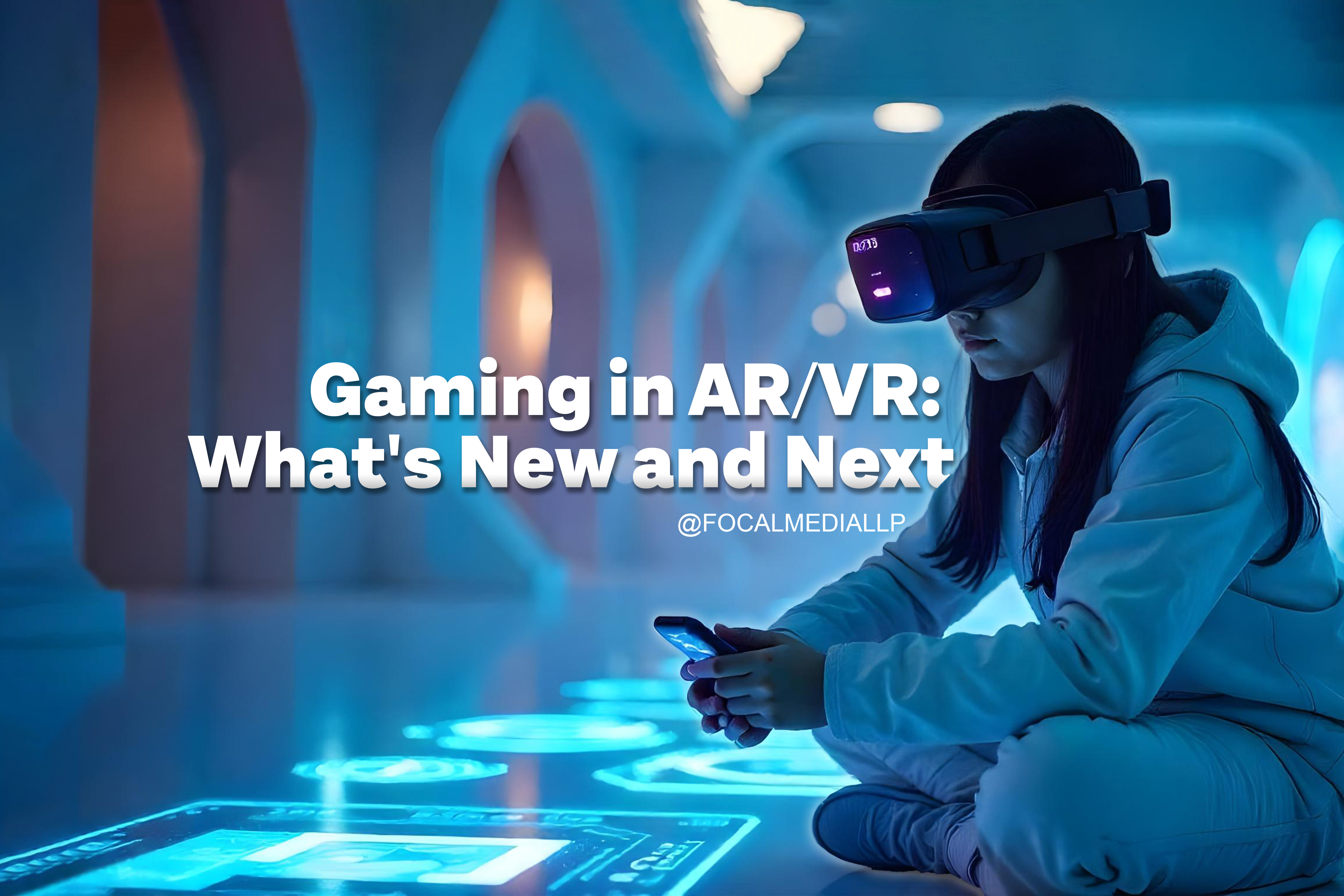

Virtual Reality (VR) and Augmented Reality (AR) are revolutionizing the games industry. These are active technologies that provide an individual experience that normal games fail to present. Through AR/VR people are able to advance gaming experience and establish virtual communication with each other. With the enhancement of such technologies, the possibility of a gaming experience is brought forth.
Here on this blog let us try to understand how these two technological advances are revolutionizing the gaming world, the trends which govern it, and the innovations which the world is witnessing.
What is AR/VR Gaming?
AR gaming uses real life and adds different layers of digital information to it. It is possible to become a virtual pet owner or come across virtual objects as public games like Pokémon GO demonstrated. While VR gaming places players in an entirely virtual and virtual environment. Using VR headsets such as Oculus Quest or PlayStation VR players are brought into new environments. Integrating digital components into AR/VR gaming and the actions that yet can be done with one’s body results in a highly immersive experience.
Why AR/VR is Popular in Gaming
To the gaming experience, AR/VR contributes the value of rectifying amusement by incorporating entertaining and engaging components. Unlike other games, AR/VR is known for motion, movements, and doing something with the game. This will be a plus for those players who are not happy with the screen-only gaming experience. Besides, integrating movements, people will play AR/VR games more nerved and be more real. Further, it means new ways to socialize and to compete, which is also interesting.
Key Trends in AR/VR Gaming
Social VR and Multiplayer AR Experiences
With AR/VR technology the multiplayer gaming sector has given major improvement. Another emerging type of VR game is social stations where everybody can spend time and play together in Rec Room and VRChat. The augmented reality games such as Pokémon GO added a feature that can only be played in groups, they can find one another and participate in special events as a team. These social factors put AR/VR Gaming in the category of shared experience making the game more enjoyable and engaging.
Location-Based Gaming with AR
AR is making a direct jump to the next level of gaming with location-based experiences. AR-based games overlay virtual objects onto real-life spaces and cause individuals to seek out the actual spaces. After GPS, Niantic’s Pokémon GO led to LBA and other location-based AR games where players had to search for page icons in real scenery. Similarly, Harry Potter: Is full of unique quests related to real places, which makes the gameplay itself a small adventure.
Immersive Storytelling in VR Games
VR offers methods of telling a story with a participant being put right into an immersive experience. Games like Half-Life: Two projects more carefully are Alyx and Vader Immortal – the kind that put players right in a storyline. VR storytelling enhances character and plot identification by providing players with visual, audible, and tangible experiences of the virtual environment. This is a trend that is gradually increasing the popularity of VR gaming especially among the large customer base.
AR/VR Fitness Games for Active Play
Another characteristic eminent in the current AR/VR games is that the games require physical exertion. Games like Beat Saber and Supernatural make use of health and fitness in conjunction with VR games. A concept that entails building games revolving around movement and making exercising to be as fun as any other game. Many AR games, such as Zombies, and Run!, require users to move about in the space in which they are playing to build and maintain a scope of intensity that can make exercise fun.
Augmented Board Games with AR
AR is in the process of enhancing interactive elements of some of the most ancient board games in existence. Players therefore are able to look at virtual icons on their physical game boards using mobile apps. Additional features of the most known AR games like Catan AR and Ticket to Ride AR enhance the picture by adding graphics and animations. Augmented board games maintain the social aspect of board games while including a form of digital extension that both technological beginners and traditional board game enthusiasts find enjoyable.
VR Arcades and Location-Based Entertainment
VR arcades can be understood as places where gamers with no personal VR equipment can play the best games. Multiplayer games can be featured through equipment and the provision of space and VR arcades are starting to become a trend for LBAs. Other companies include Zero Latency and The VOID, which present extended-scale virtual environments – zombie shootouts and an escape room, respectively. Virtual Reality arcades are the best platform for anyone who would love an AR/VR game experience but doesn’t want to purchase home hardware.
Cross-Platform Compatibility in AR/VR Games
Multiplatform interactions are becoming a requirement for allowing players from the AR/VR gaming platforms to interact. Rec Room is one of such pieces that provide players with support on Oculus, PlayStation VR, and PC. AR/VR game that are compatible with different platforms enables the players to play through different devices meaning that more players are found hence encouraging social contacts.
Latest Innovations in AR/VR Gaming
Haptic Feedback for Realistic Gameplay
The usage of haptic feedback is making gaming in a VR environment more realistic. Some gloves work with controllers and make players feel what actions in the game feel like. For instance, the sensation of touching something when there is an attempt to shoot a virtual gun or pull a bow. A real-world suit called Teslasuit with vibration feedback keeps the player aware of the blows delivered in the virtual world. In the context of AR and VR haptics facilitate the enhanced immersion that is required for a better gaming experience.
AI Integration for Dynamic Experiences
AI is enhancing the AR/VR market by making such experiences more sophisticated and adaptable. Self-controlled and selfish NPCs in VR games such as those in Blade and Sorcery are controlled by AI and hence are apt to players’ actions making the game feel natural. In AR, AI helps games to change according to the players playing environment making the experience more fulfilling. AI integration into AR/VR gaming enhances the play because it responds to the decisions made by the players.
Improved Graphics and Realism
The increased clarity of automobile screens and superior graphic cards have enhanced the graphical quality of AR/VR games. VDTs like Oculus Quest 2 and Valve Index have higher resolution in displays thus reducing the feeling of queasiness and improving vision. Authentic graphics cause AR/VR worlds to be more realistic and, thus, create more depth for the players and games.
Mixed Reality for Hybrid Gaming
Mixed Reality (MR) is a real environment enriched with part of a virtual environment; it allows the player to interact with both virtual and real objects. As is evident with devices like the Microsoft HoloLens, gaming begins to merge the real with the actual with convergence as a result happening between the physical environment and the virtual environment. There is still much work to be done in the evolution of MR but it has possibilities for new forms of game-playing welfare where real-world objects and virtual realms both interrelate with great ease.
Natural Language Processing for In-Game Conversations
Intuitive speech writing and natural language interaction enable the players to vocalize and build interaction between the game’s non-playable characters and other players. VR games like Star Trek: The members of the Bridge Crew speak into microphones to address each other, which helps to tie an interactive bow on things. With NLP, depictions of conversational AI for use with NPCs are commonly seen pushing gaming to the probability of being more interesting and engaging for every class of gamers.
Full-Body Tracking for Movement-Based Games
Full-body tracking in VR gaming relates to bodily movement tracking for representation in a game. Games such as VR games Blade and sorcery have the body tracking capability for movement thus setting free movements. Body tracking improves depth to VR gaming making it even more realistic for players to move and interact within the game environments.
Wearable AR/VR Technology for Convenient Gaming
Smart AR/VR gadgets are making games that are fully immersive, and fully available. Neal and Magic Leap have been designing portable AR glasses and VR headsets for the full mobility experience. Wearables make it possible for players to play games without complicated equipment, provided that the game is simple and requires moderately heavy use of augmented or virtual reality.
Benefits of AR/VR in Gaming
AR/VR gaming provides unique benefits for players:
-
- Increased Immersion: This way, players get involved in the game and the end product is greatly enhanced, giving people unforgettable experiences.
-
- Enhanced Physical Engagement: While encouraging engagement in more game playing, the use of AR/VR makes games healthier than traditional ones.
-
- Social Interaction: AR/VR games also have social opportunities associated with them because all games host their players within central environments.
-
- Personalized Gameplay: AR/VR games powered by AI mean that a game can choose a specific path that a user might like in this or another game, so the possibilities make a player happier and more satisfied.
Challenges in AR/VR Gaming
AR/VR gaming faces some challenges:
-
- High Cost of Equipment: AR/VR technology, however, can be expensive, and this reduces its being used.
-
- Motion Sickness Issues: VR headsets could be problematic for some users and in turn disrupt the experiences.
-
- Technical Requirements: The games also require a very fast internet connection and strong hardware to run smoothly which can be a disadvantage.
-
- Limited Content Variety: It is important to note that as much as there is an emergence of AR/VR games the catalog is relatively small compared to traditional games.
The Future of AR/VR Gaming
AR/VR gaming will only continue to grow in the future. As the trends develop, the application of AR/VR will be even cheaper and could be used by anyone. Such advancements like AI, MR, or wearable devices will add to the gaming space extending physical reality into the digital one and back. The difference between the virtual and real life will continue to be obliterated to offer better possibilities in gaming. Since the gaming industry has decided to go for AR/VR, more immersion experiences will be foreseen, with a whole new level of engagement.
Conclusion
AR/VR is playing a major role in revolutionizing the existing gaming business by providing experiences not limited to games. Due to continual advancements in the sector, the AI feature, haptic systems, and cross-platform, AR/VR is increasingly exhibiting realism and accessibility. Despite this, as can be seen, AR/VR is still progressing, more players are being drawn in and subsequently potentially exciting.



Permalink