
Introduction to AR/VR Tools in Mental Health
Workplace stress is at an all-time high. Long hours, tight deadlines, and digital overload are leaving employees mentally exhausted. That’s where AR/VR tools come in. These immersive technologies are now being used to support mental health at work, offering relaxation, mindfulness, and even therapeutic interventions right inside the office.
In this blog, we explore how AR/VR tools are transforming the way companies care for employee mental well-being and how businesses can adopt these tools to build healthier, more productive teams.
Why Mental Health at Work Needs Attention
Mental health challenges like anxiety, burnout, and depression are not just personal struggles; they directly impact workplace performance. Studies show:
- Over 70% of employees report feeling stressed at work.
- Mental health issues cost companies billions annually in lost productivity.
- Hybrid and remote work, while flexible, often leads to isolation and digital fatigue.
This is where AR/VR tools can create a meaningful difference by offering new ways to manage stress and promote emotional well-being.
How AR/VR Tools Help Mental Health
1. Immersive Relaxation Environments
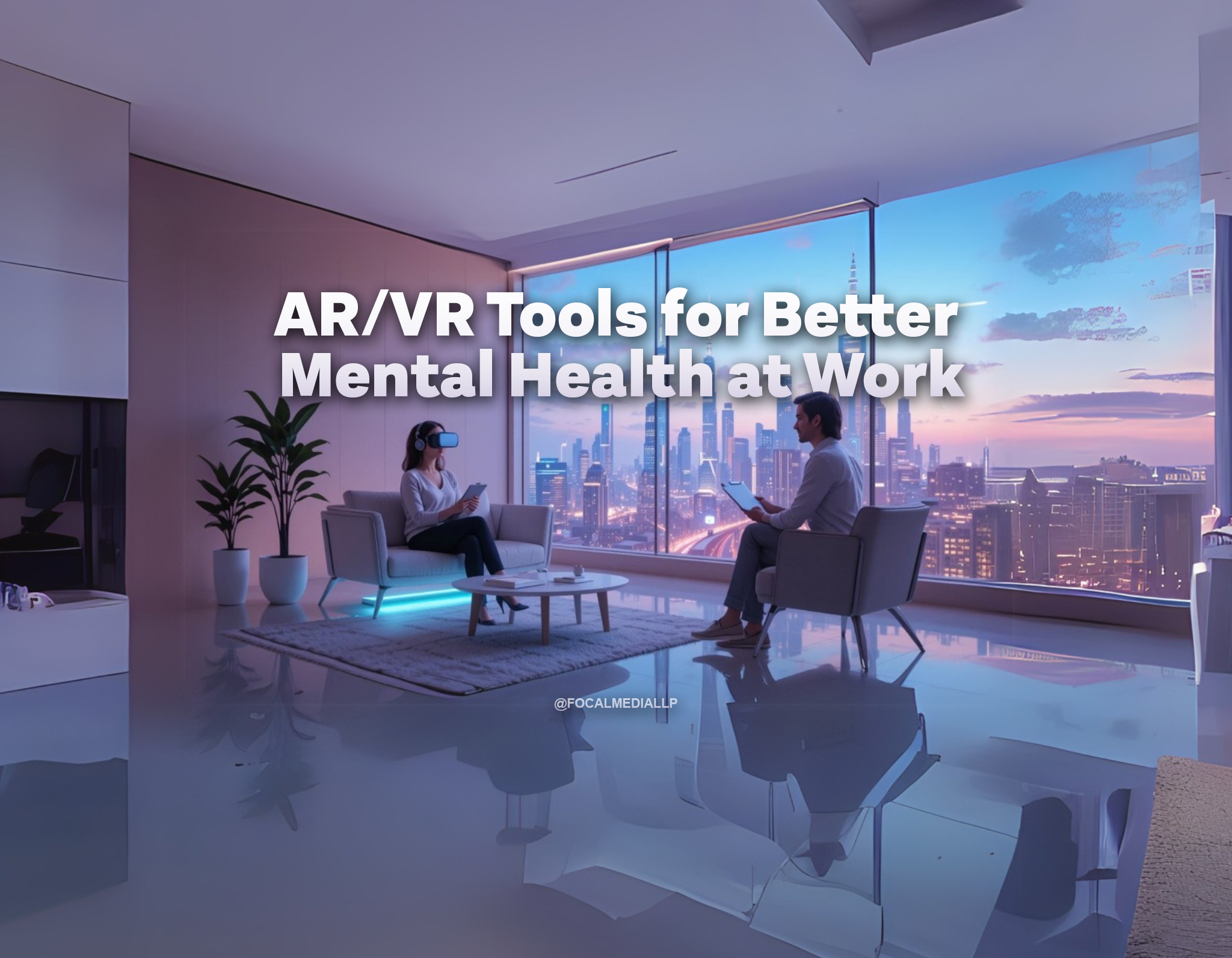
These tools can transport employees from their stressful desks to calming environments, think of a beach, a forest, or a quiet mountain retreat. These short immersive breaks can:
- Lower stress levels in minutes
- Reduce cortisol (the stress hormone)
- Improve focus and creativity afterward
Apps like Tripp and Calm Place VR are already being used by companies to give employees access to guided relaxation sessions using AR/VR.
2. Guided Meditation and Breathing Exercises
AR/VR provides step-by-step guidance for mindfulness, deep breathing, and meditation. Unlike an audio app, these sessions are fully immersive and more engaging:
- Reduce workplace anxiety
- Help employees recharge during breaks
- Improve emotional regulation and clarity
3. Virtual Mental Health Support
Companies are beginning to use AR/VR tools like VR therapy simulations for stress management and emotional skill building. These include:
- Cognitive behavioral therapy (CBT) sessions in a virtual environment
- Role-playing for conflict resolution and emotional intelligence
- Access to virtual counselors for early intervention
4. AR-Based Daily Well-Being Prompts
Augmented Reality doesn’t require full immersion. Smart AR/VR tools, such as AR wearables or mobile apps, can offer real-time reminders like:
- “Take a deep breath.”
- “Stretch your neck and shoulders.”
- “Step away from your screen for 5 minutes.”
These small nudges from AR/VR can reduce cumulative stress and help employees form healthier work habits.
5. Mental Health Training for Managers
One overlooked benefit of AR/VR tools is manager education. Companies can use these tools to:
- Simulate conversations with struggling team members
- Teach empathy and active listening through realistic scenarios
- Practice mental health first-aid in a safe, virtual space
This ensures that leadership is equipped to support team well-being with confidence and compassion.
Industries Adopting AR/VR Tools for Mental Wellness
- Tech and Startups: High-stress, high-performance environments use AR/VR tools for VR meditation rooms and AR break-time tools.
- Healthcare: Providers use AR/VR tools to manage burnout in nurses and doctors through virtual recovery rooms.
- Manufacturing and Construction: Workers in physically and mentally demanding roles are given VR-guided stress relief sessions using AR/VR tools.
- Corporate Offices: HR teams deploy AR/VR tools and apps to encourage better posture, break-taking, and mindfulness.
Benefits of AR/VR Tools in Mental Health
- Accessibility: No need to book a therapist or travel, help is available instantly with AR/VR tools.
- Scalability: A single AR/VR program can support hundreds of employees.
- Privacy: Sessions are personal and confidential, encouraging usage.
- Customization: Tools adapt to individual needs and stress levels.
Challenges to Implementation
While promising, AR/VR tools for mental health face some barriers:
- Cost: High-quality VR headsets and custom programs can be expensive.
- Adoption: Some employees may be hesitant to try new tech like AR/VR tools.
- Motion Sickness: A small percentage of users may experience discomfort.
Solutions include starting with mobile-based XR Tools, offering opt-in programs, and providing onboarding support to ease the comfort with the tech.
The Future of AR/VR in Mental Health
Advancements in AI-powered personalization, biometric feedback, and 5G connectivity will take XR Tools to the next level. Expect future tools to:
- Adapt in real-time to user mood and energy
- Offer group meditation in shared virtual spaces
- Connect seamlessly with wearables for deeper insights
Conclusion
AR/VR tools are more than just tech trends; they are becoming vital resources for supporting employee mental health. From immersive relaxation experiences to on-demand mindfulness sessions, these tools offer practical, scalable, and engaging solutions for today’s stressed workforce.
Companies that invest in employee well-being using AR/VR tools are not just creating healthier workplaces, they’re building stronger, more resilient teams. It’s time to bring mental health to the forefront of workplace innovation with the help of Modnexus.