

Introduction
AR/VR technology is revolutionizing quality checks in industries by offering real-time insights, enhanced accuracy, and fewer errors. Conventional quality control processes may be time-consuming and subject to human errors. XR brings sophisticated visualization and accuracy, which improves the inspection process and delivers improved results.
This blog discusses how AR/VR is improving quality checks, its advantages, and its uses in different industries.
How AR/VR Improves Quality Checks
1. Real-Time Inspection and Error Detection
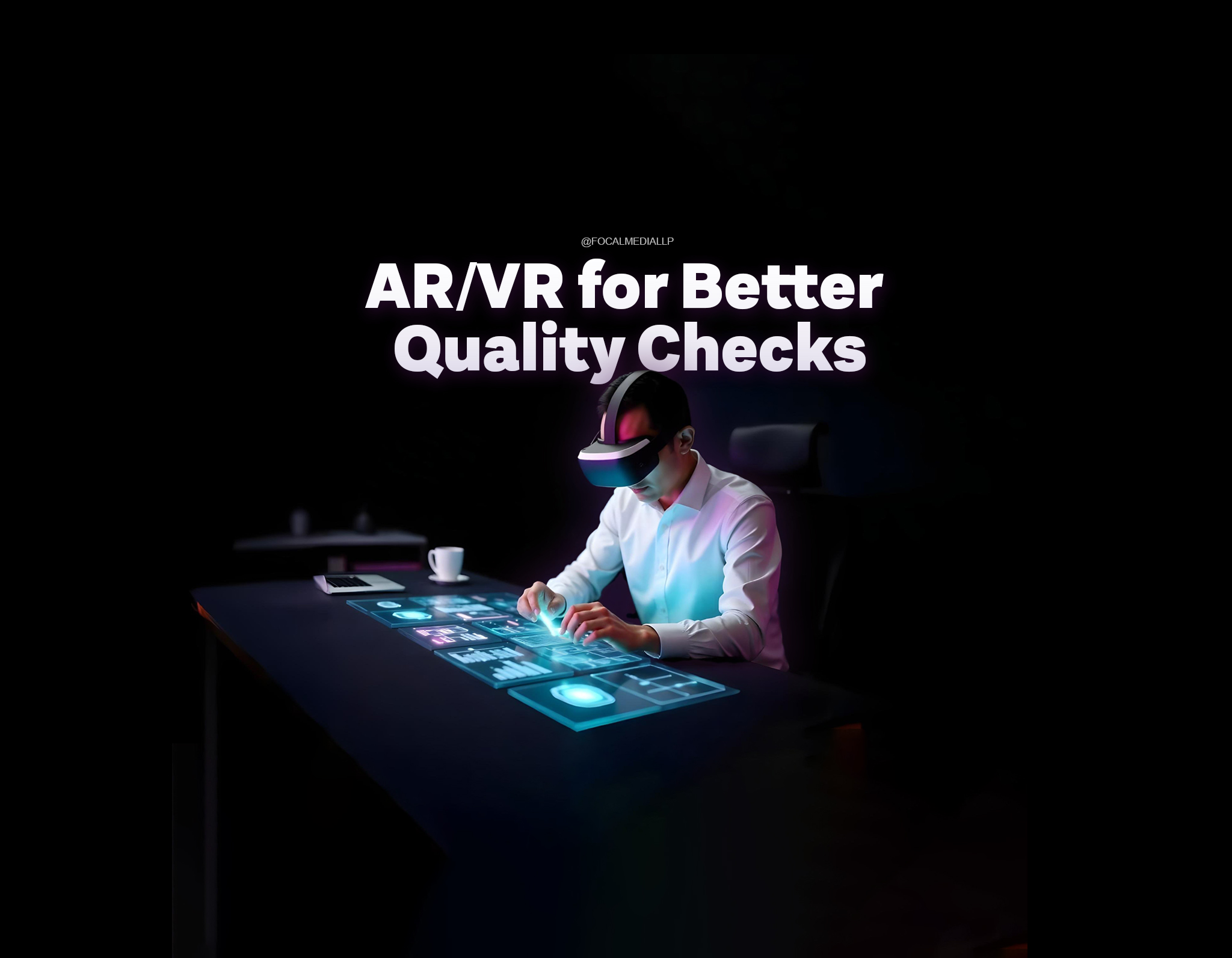
XR allows for real-time inspection by projecting digital information onto physical items. This aids in:
- Increased accuracy in defect identification.
- Acceleration of inspection using XR technology.
- Facilitating live monitoring for real-time corrections.
2. Enhanced Accuracy and Precision
With the aid of advanced imaging, XR enhances accuracy by:
- Presenting 3D models for enhanced visualization.
- Enabling accurate measurements without human error.
- Enabling consistent quality checks for all product lines.
3. Advanced Training and Simulation
- AR/VR allows for hands-on training and virtual simulation, providing:
- Realistic training simulators for inspectors.
- Virtual error scenarios for improved preparation.
- Skill development on the go without hardware resources.
4. Remote Quality Inspections
Experts can now inspect from anywhere with XR. This enables:
- Less travel expense and quicker inspection cycles.
- Working with remote teams for real-time input.
- Immediate communication for quality checks.
5. Data Integration and Reporting
XR is easily integrated with digital systems to:
- Automate data capture in inspections.
- Provide detailed quality reports in real time.
- Analyze trends for quality improvement in the future.
Industries That Are Succeeding Using AR/VR in Quality Inspection
1. Manufacturing
Manufacturing quality inspections are enhanced by:
- Easily detect faults early in production.
- Tracking assembly accuracy with XR overlays.
- Minimizing waste and rework by accurate inspections.
2. Automotive
The auto industry applies XR to:
- Inspect auto parts with virtual overlays.
- Enforcing assembly accuracy in intricate systems.
- Improving safety inspections via virtual simulations.
3. Healthcare
In medicine, it supports quality inspections by:
- Verifying accuracy and compliance for medical devices.
- Enabling remote audits and surgical accuracy.
- Improving patient safety through virtual testing.
4. Aerospace
Aerospace industries use XR for:
- Inspecting aircraft parts with high precision.
- Minimizing human error in intricate processes.
- Enhancing safety compliance through immersive inspections.
Challenges and Future of AR/VR in Quality Checks
Challenges faced in AR/VR
- High Implementation Costs – Implementing AR/VR systems is cost-intensive.
- Technical Expertise – Trained personnel are required to use XR tools.
- Data Privacy – Sensitive inspection data must be protected.
Future Prospects of AR/VR
- More sophisticated XR solutions for automated quality control.
- Enhanced coordination through real-time remote inspections.
- Greater adoption in industries for error-free quality checks.
Conclusion
AR/VR is transforming quality checks by providing real-time data, enhancing precision, and allowing remote inspections. With the passage of time and advancements in technology, XR will become a major player in ensuring improved quality assurance across industries.
Companies using AR/VR for quality inspections build a competitive edge with quicker, more accurate, and less expensive checks. The future of quality inspection is now – and it’s AR/VR-fueled.