
Introduction
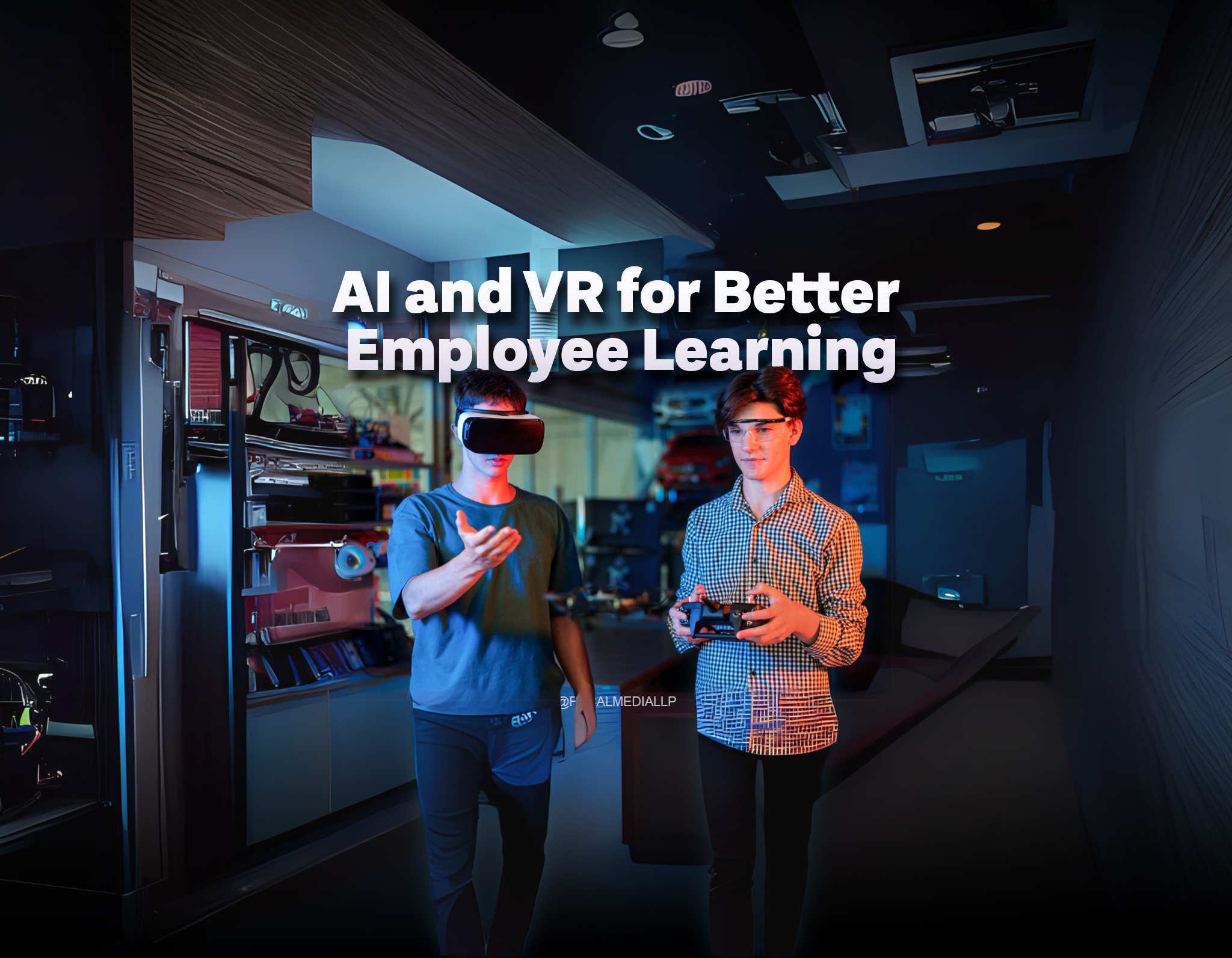
Training employees has always been crucial, but today’s workplaces need smarter, more engaging ways to upskill teams. That’s where AI and VR step in. By blending intelligent automation with immersive learning environments, companies can now deliver training that’s not only effective but also enjoyable.
In this blog, we’ll explore how AI and VR are changing employee learning, making it more personalized, hands-on, and results-driven.
Why Traditional Training Falls Short
Most traditional training methods—like manuals, slideshows, or even in-person sessions—can feel outdated. They often lack interaction, real-time feedback, and adaptability. Employees may end up forgetting what they learned or struggle to apply it in real situations.
Enter AI and VR—technologies that bring training to life in real time and context.
How AI and VR Improve Learning Outcomes
1. Immersive Real-World Simulations
Using VR, employees can step into realistic job scenarios:
- Practice safety procedures in virtual factories
- Train customer service in simulated stores
- Rehearse complex tasks without any real-world risk
2. Personalized Learning Paths
AI can track performance and customize content:
- Identify strengths and weaknesses
- Adapt lessons based on progress
- Suggest refresher modules when needed
3. Engaging, Hands-On Learning with AI and VR
AI and Virtual Reality together make learning interactive and fun:
- Gamified modules with real-time feedback
- Performance scoring and dynamic challenges
- Hands-on practice instead of passive reading
4. Scalable Training Across Locations
Whether you have 10 employees or 10,000, AI and VR offer scalable solutions:
- Train remote teams simultaneously
- Maintain consistent training quality across branches
- Reduce the cost and time of physical workshops
5. Data-Driven Insights
With AI, companies can track learning metrics:
- Time spent on tasks
- Mistakes and improvements
- Completion rates and success scores
This data helps refine the training process and improve future outcomes.
Real-World Examples of AI and VR in Employee Training
Healthcare
Surgeons practice procedures in VR while AI offers performance feedback, helping them improve precision and safety before working on real patients.
Manufacturing
Factory workers use VR to learn machine operations, while AI identifies areas needing more practice, reducing accidents and downtime.
Retail
Employees in retail environments engage in role-play scenarios with virtual customers. AI assesses soft skills like communication and problem-solving.
Aviation
Pilots and ground crew train in high-risk simulations using VR. AI monitors stress levels and decision-making to improve response under pressure.
Challenges and Considerations in AI and VR
While AI and VR offer powerful benefits, companies must consider:
- Upfront costs for hardware and content creation
- Ensuring employees are comfortable with new tech
- Data security and privacy, especially with AI tracking
The Future of Workplace Learning Using AI and VR
As more organizations adopt AI and VR, we can expect:
- Fully immersive onboarding programs
- On-the-job guidance through smart wearables
- Continuous micro-learning through AI-driven platforms
These technologies will make learning a seamless part of everyday work, not a one-time event.
Conclusion
AI and VR are no longer futuristic buzzwords—they’re here, and they’re transforming how employees learn. From hands-on practice to intelligent coaching, these tools are helping companies build stronger, smarter teams. If you want to keep your workforce competitive, now’s the time to invest in better training.
Want to explore how AI and VR can supercharge your employee learning programs? Contact Modnexus for tailored solutions that work.