

Introduction
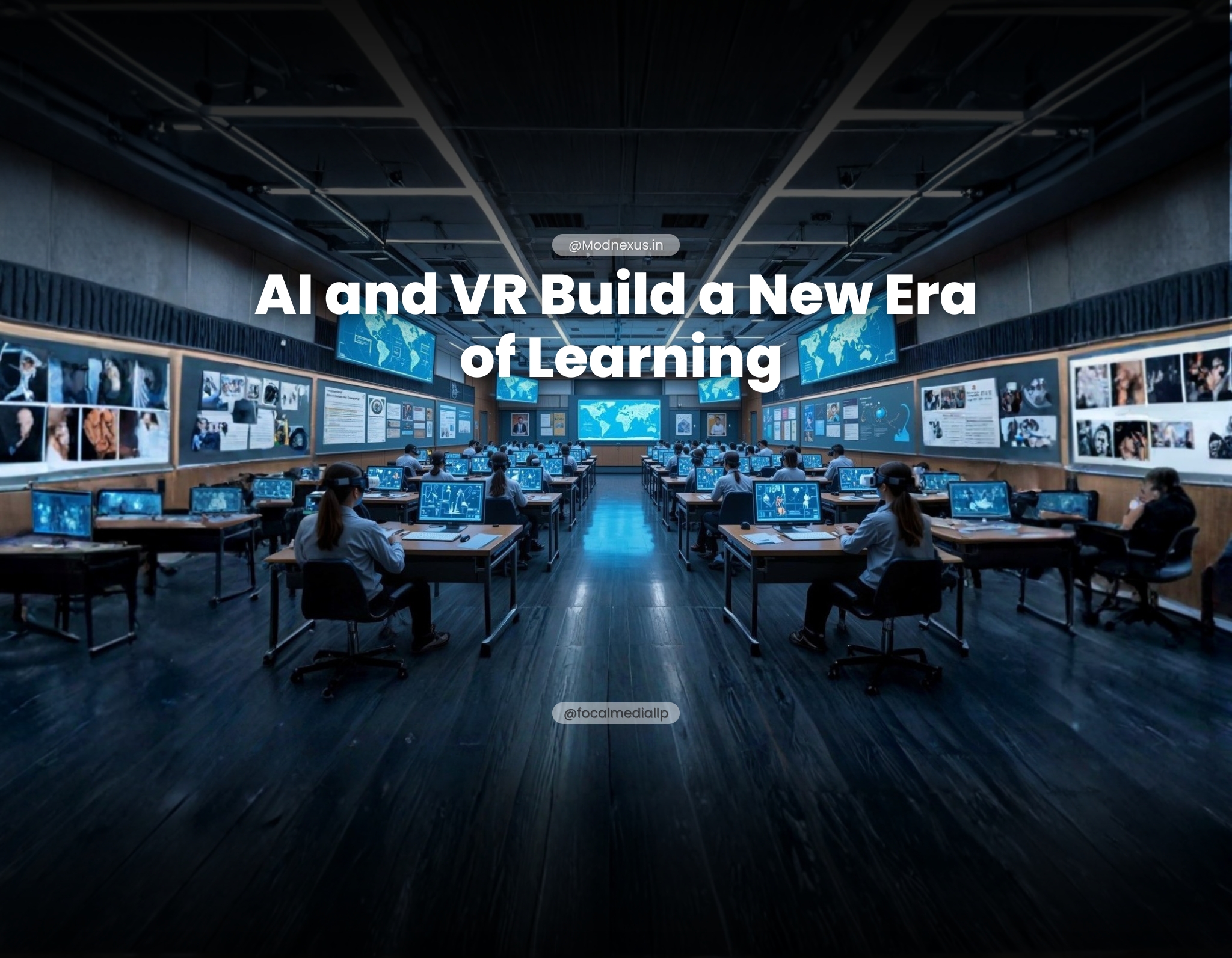
Education has entered a new age where innovation meets interaction. AI and VR are reshaping how students learn, teachers teach, and institutions deliver knowledge. This combination makes lessons more engaging, personalized, and practical than ever before. The fusion of AI and VR creates classrooms that think, adapt, and immerse learners in experiences instead of just lessons.
How AI and VR Are Transforming Education
Traditional classrooms focus on textbooks and repetition. But AI + VR bring lessons to life through interactive environments and adaptive technology. Here’s how these technologies are transforming modern learning:
- Personalized Learning Paths: AI analyzes a student’s pace, strengths, and challenges to create customized learning experiences.
- Immersive Visualization: With VR, students can explore virtual labs, historical landmarks, or even the human body.
- Data-Driven Insights: AI tracks learning progress, helping educators refine teaching strategies.
- Accessibility for All: Both AI and VR break barriers for remote and differently-abled students through flexible, visual education.
This mix allows students to truly understand concepts by experiencing them firsthand.
Benefits of AI and VR in Classrooms
The integration of AI and VR makes education more impactful, not just interactive. Some key benefits include:
- Higher Engagement: Immersive simulations keep students motivated and curious.
- Improved Retention: Learning through experience helps students remember information longer.
- Instant Feedback: AI evaluates performance instantly, guiding students to improve continuously.
- Collaborative Learning: Virtual classrooms let students connect globally, encouraging teamwork and creativity.
Schools adopting AI + VR see significant improvements in participation and comprehension rates.
Real-World Applications of AI and VR in Learning
The use of AI and VR extends beyond the classroom:
- Medical Training: Students practice surgeries and patient care in safe virtual environments.
- STEM Education: VR simulations bring physics and chemistry experiments to life.
- Language Learning: AI chatbots and VR cultural tours improve fluency and understanding.
- Corporate Training: Employees develop practical skills through realistic, hands-on modules.
These applications make learning more relevant to real-world challenges and career readiness.
Challenges in Adopting AI and VR in Education
While the potential of AI and VR is vast, a few challenges remain:
- High Initial Costs: Developing quality VR content and AI-driven systems can be expensive.
- Training Requirements: Teachers need time and support to adapt to these technologies.
- Technical Accessibility: Reliable hardware and internet are essential for smooth experiences.
However, as costs decrease and awareness increases, more institutions are embracing AI + VR to enhance education quality.
The Future of Learning with AI and VR
The future classroom will blend physical and virtual learning seamlessly. AI + VR will power intelligent learning environments where:
- Students receive real-time personalized guidance.
- Lessons evolve automatically based on comprehension.
- Virtual reality trips become part of everyday lessons.
Education will become more intuitive, global, and inclusive, driven by data and powered by imagination.
Conclusion: Transform Learning with ModNexus
AI and VR are not just tools; they are the foundation of a smarter learning future. They turn information into experiences and students into explorers. At ModNexus, we help educational institutions and businesses implement AI- and VR-powered learning solutions that engage, educate, and inspire. Contact ModNexus today to reimagine how your learners connect with knowledge.