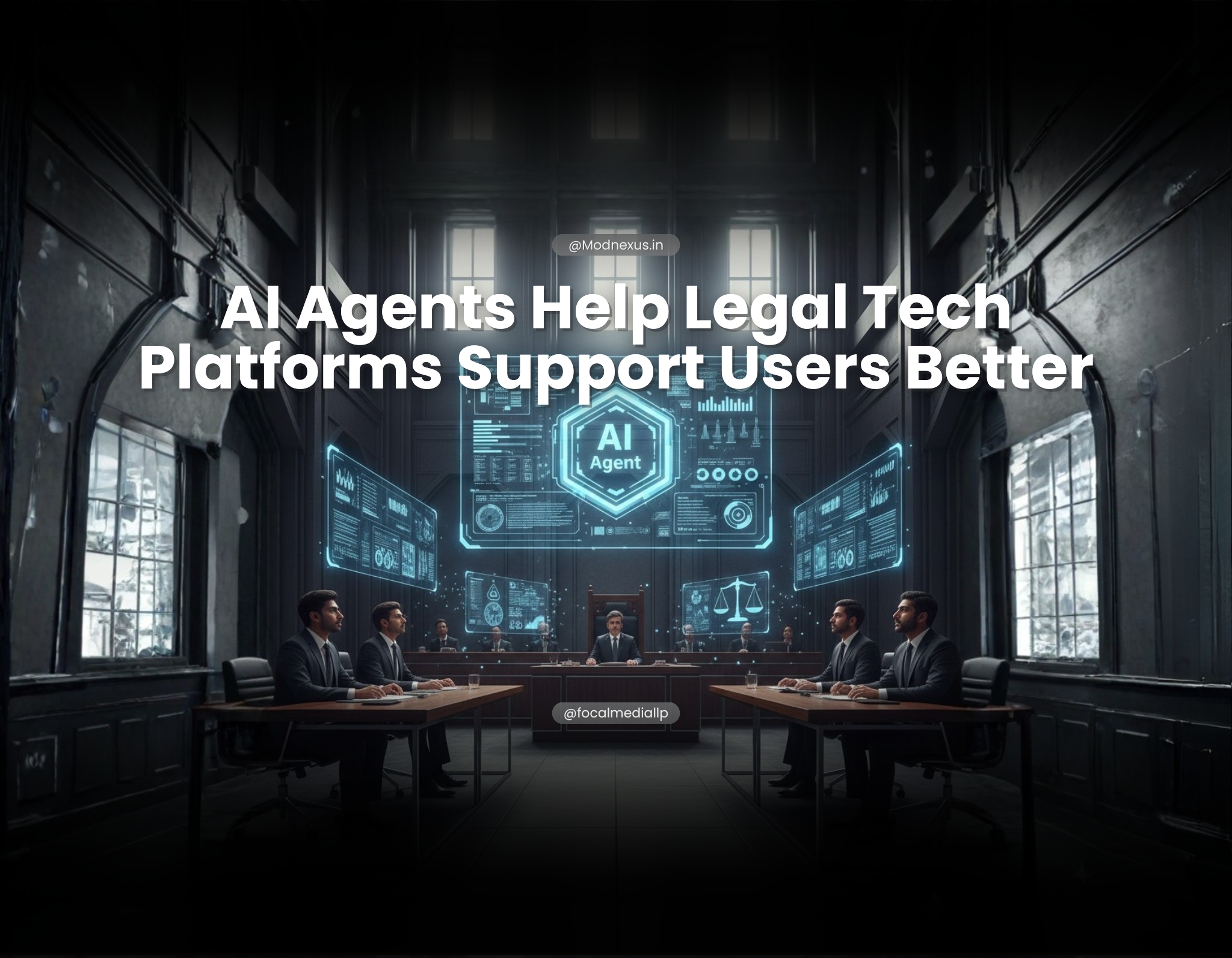

At ModNexus, we closely observe how intelligent systems are transforming complex software platforms. Legal tech operates in a high-risk environment where accuracy, speed, and clarity directly affect outcomes. Users rely on these platforms for contracts, compliance, filings, and case management often under strict deadlines. In this setting, user support is not optional; it is business-critical. This is where AI Agents are changing how legal tech platforms support users at scale.
Traditional support systems struggle to keep up with modern expectations. Long ticket queues, limited working hours, and repetitive queries slow down users. AI Agents offer a smarter, always-available alternative that improves efficiency without compromising accuracy.
Why User Support Is a Core Challenge in Legal Tech
Legal software is inherently complex. Many users are not legal experts, yet they must complete precise actions within rigid workflows. Even small misunderstandings can lead to compliance risks, rejected filings, or missed deadlines.
When support is slow or unclear, trust in the platform erodes quickly. Strong user support directly impacts adoption, retention, and long-term credibility. This makes intelligent, scalable assistance essential for modern legal tech platforms.
How AI Agents Improve Support Accuracy
Unlike rule-based chatbots, AI Agents understand context, intent, and workflow state. They provide guidance that matches where the user is in a legal process.
AI Agents can:
- Interpret user questions in context
- Guide users step by step through legal workflows
- Explain legal terms in plain language
- Resolve common issues instantly
- Escalate sensitive or complex cases to human teams
This results in clearer answers and fewer user errors.
Reducing Support Load Without Sacrificing Quality
Support teams in legal tech platforms face a high volume of repetitive queries. Handling these manually increases costs and slows response times.
By deploying an AI agent, platforms automate responses to frequent questions while maintaining consistency. This reduces ticket backlogs and frees human experts to focus on high-risk issues that require judgment and experience.
Faster Help for Time-Sensitive Legal Tasks
Legal workflows are often deadline-driven. Delayed assistance can have serious consequences. AI Agents provide immediate support, helping users resolve issues before mistakes occur.
Because AI Agents understand platform workflows, they can validate inputs, highlight missing steps, and prevent errors in real time. This proactive support significantly reduces risk.
Improving Onboarding for New Users
Onboarding is a major friction point in legal tech. Complex interfaces and unfamiliar terminology often slow adoption.
During onboarding, AI Agents guide users through setup, explain features in context, and suggest next actions. This shortens learning curves, improves early engagement, and increases long-term usage.
Supporting Compliance and Building Trust
Compliance is non-negotiable in legal technology. Well-implemented AI Agents operate within controlled knowledge bases and approved documentation.
They deliver verified information, log interactions, and flag sensitive cases for human review. This ensures support remains auditable, accurate, and aligned with regulatory requirements.
Practical Use Cases Across Legal Tech Platforms
AI Agents are already improving user support across legal technology solutions:
- Contract platforms use them to explain clauses and approval flows
- Compliance tools rely on them for checklists and filing guidance
- Case management systems use them for deadlines and task assistance
- Document platforms use them to clarify templates and inputs
Each use case reduces friction while improving clarity.
Business Impact on Retention and Efficiency
When AI Agents handle routine support efficiently, users experience faster resolutions and fewer disruptions. This improves satisfaction, builds trust, and increases retention.
Support shifts from being a cost center to a strategic advantage that directly supports platform growth.
Best Practices for Implementing AI Agents
Successful adoption of AI Agents requires a structured approach. Platforms should start with low-risk queries and expand gradually.
Clear escalation rules, continuous monitoring, and regular knowledge updates ensure AI Agents remain accurate and aligned with user needs.
Scaling Support Without Scaling Costs
As legal tech platforms grow, support demand increases. AI Agents allow platforms to scale support without proportionally increasing operational costs.
They maintain consistent quality, operate around the clock, and adapt as workflows evolve.
Conclusion
Legal tech users expect fast, accurate, and reliable support at every interaction. AI Agents are becoming a foundational layer of modern legal technology platforms. When implemented thoughtfully, they reduce friction, improve accuracy, and strengthen user trust.
For legal tech companies aiming to scale support responsibly, AI Agents provide a future-ready solution one that enables sustainable growth with strategic guidance from ModNexus.