
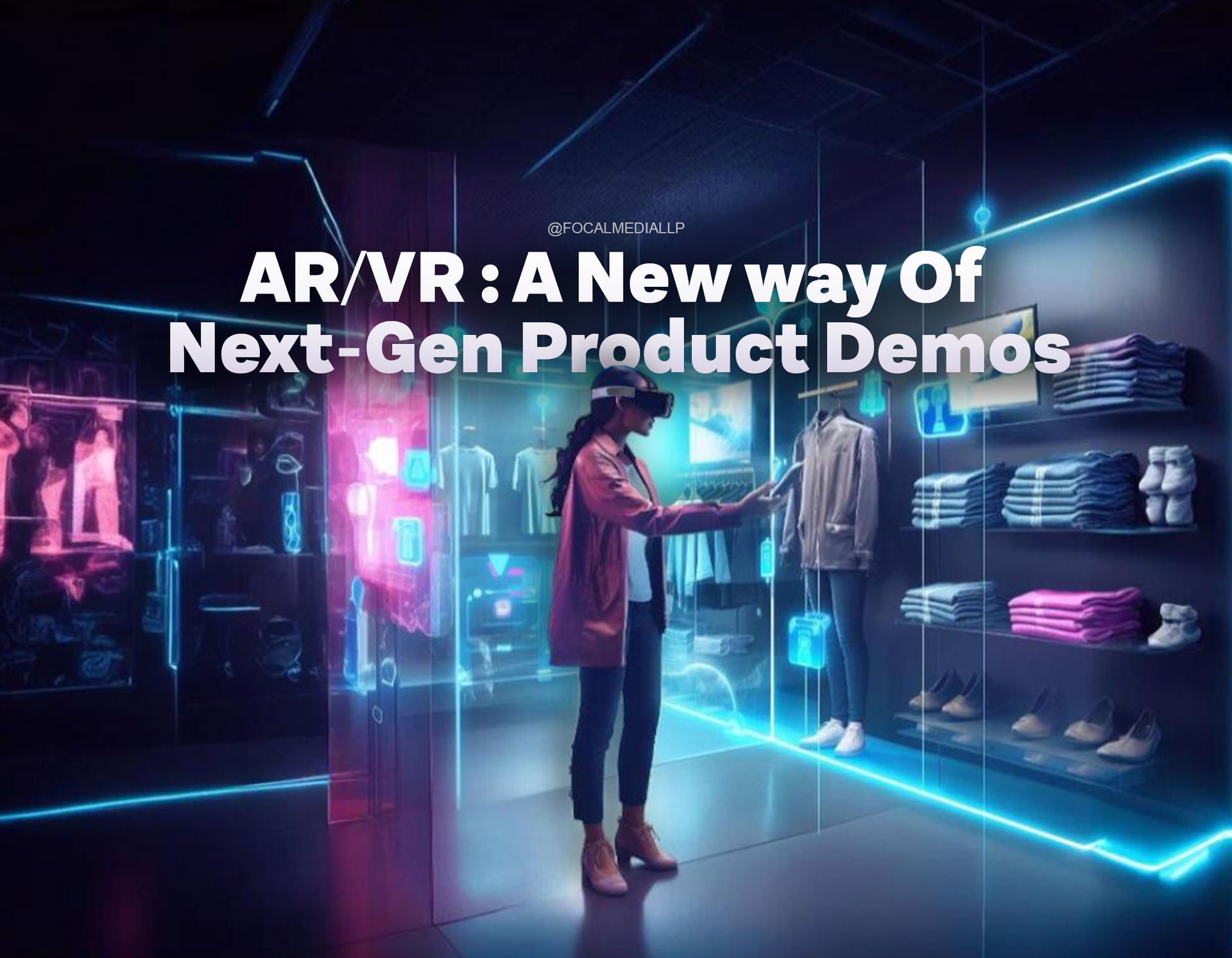

In today’s fast-paced, digitally-driven world, capturing and maintaining consumer attention is more challenging than ever. Traditional methods of showcasing products are increasingly losing their appeal. Static images, lengthy brochures, and even conventional video presentations often fail to deliver the immersive and engaging experiences that modern consumers crave. This is where Augmented Reality (AR) and Virtual Reality (VR) technologies step in. It offers a groundbreaking approach to product demos that is transforming how businesses connect with their target audience.
The Limitations of Traditional Product Demos
Before diving into the revolutionary impact of AR/VR, it’s crucial to understand the shortcomings of traditional product demos.
- Lack of Engagement: Static presentations often fail to capture the imagination and excitement of potential customers.
- Limited Interactivity: Traditional methods offer little to no opportunity for customers to actively engage with the product.
- Inability to Visualize: It can be challenging for customers to visualize how a product will fit into their lives or solve their specific needs based on static images or videos.
- High Costs of Physical Demos: Physical product demos, especially for large or complex items, can be expensive to transport, set up, and maintain.
- Geographical Limitations: Reaching a global audience with physical product demos is logistically complex and costly.
These limitations highlight the urgent need for innovative solutions that can overcome these obstacles. Also deliver more engaging, interactive, and accessible product demos.
AR/VR: A Paradigm Shift in Product Demonstrations
Augmented Reality (AR) and Virtual Reality (VR) technologies offer a powerful alternative to traditional product demos, providing immersive and interactive experiences that captivate and inform potential customers.
Augmented Reality (AR): Bridging the Gap Between the Physical and Digital Worlds
AR technology overlays digital information onto the real world, enhancing the user’s perception of their surroundings. Through smartphones, tablets, or specialized AR glasses, users can interact with virtual objects superimposed on their physical environment.
- Interactive Product Visualization: AR allows customers to visualize how a product would look and function in their own space. For example, furniture retailers can use AR apps to let customers virtually place furniture in their homes, allowing them to see how it fits with their existing décor.
- Enhanced Product Information: AR can provide customers with real-time information about a product, such as its features, specifications, and pricing, simply by pointing their device at the product.
- Remote Assistance and Training: AR can be used to provide remote assistance and training for complex products. Technicians can use AR glasses to overlay instructions and diagrams onto the physical product, guiding them through maintenance or repair procedures.
- Personalized Experiences: AR can be used to create personalized product demos tailored to the individual customer’s needs and preferences. For example, a clothing retailer could use AR to allow customers to virtually try on clothes and accessories, providing personalized style recommendations based on their body type and preferences.
- Try Before You Buy: This crucial feature allows consumers to experience the product as close to real life as possible without making an initial commitment.
Virtual Reality (VR): Immersive and Engaging Product Experiences
VR technology creates fully immersive, computer-generated environments that transport users to a different reality. Using VR headsets, users can explore virtual worlds and interact with virtual objects in a realistic and engaging way.
- Immersive Product Simulations: VR can be used to create immersive product demos that simulate real-world scenarios. For example, a car manufacturer could use VR to allow customers to take a virtual test drive of a new car model, experiencing its performance and features in a realistic and engaging way.
- Virtual Showrooms and Events: VR can be used to create virtual showrooms and events, allowing customers to explore products and interact with sales representatives from the comfort of their own homes. This is particularly useful for reaching a global audience and reducing the costs associated with physical events.
- Interactive Training Simulations: VR can be used to create interactive training simulations for complex products. For example, a medical device manufacturer could use VR to train surgeons on how to use a new surgical instrument, providing them with a safe and realistic environment to practice their skills.
- Storytelling and Emotional Connection: VR can be used to create powerful storytelling experiences that connect with customers on an emotional level. For example, a travel company could use VR to transport customers to a virtual destination, allowing them to experience the sights, sounds, and culture of that place before booking a trip.
Benefits of AR/VR
The adoption of AR/VR for product demos offers numerous benefits for businesses:
- Increased Engagement: AR/VR experiences are inherently more engaging than traditional methods, capturing and maintaining the attention of potential customers.
- Improved Product Understanding: AR/VR allows customers to interact with products in a more meaningful way, leading to a better understanding of their features and benefits.
- Enhanced Brand Awareness: By offering innovative and memorable experiences, AR/VR can help businesses stand out from the competition and enhance brand awareness.
- Increased Sales Conversions: By providing customers with a more immersive and informative experience, AR/VR can increase sales conversions.
- Reduced Costs: AR/VR can reduce the costs associated with physical product demos, such as transportation, setup, and maintenance.
- Wider Reach: AR/VR allows businesses to reach a global audience with their product demos, regardless of geographical limitations.
- Data Collection and Analytics: AR/VR product demos can provide valuable data and analytics about customer behavior, allowing businesses to optimize their marketing and sales strategies.
Implementing AR/VR Product Demos: Key Considerations
While the benefits of AR/VR product demos are undeniable, successful implementation requires careful planning and execution:
- Define Clear Objectives: Determine what you want to achieve with your AR/VR product demo. Are you looking to increase brand awareness, generate leads, or drive sales?
- Identify Your Target Audience: Understand your target audience’s needs and preferences. What type of experience will resonate with them?
- Choose the Right Technology: Select the AR/VR technology that best suits your product and target audience. Consider factors such as cost, accessibility, and user experience.
- Create Compelling Content: Develop engaging and informative content that showcases the key features and benefits of your product.
- Ensure a Seamless User Experience: Make sure your AR/VR product demo is easy to use and navigate. A clunky or confusing experience can deter potential customers.
- Promote Your AR/VR Demo: Let your target audience know about your AR/VR product demo. Promote it on your website, social media channels, and other marketing materials.
- Gather Feedback and Iterate: Collect feedback from users and use it to improve your AR/VR product demo over time.
Examples of Successful AR/VR Product Demos
Several companies have already successfully implemented AR/VR product demos, demonstrating the potential of these technologies:
- IKEA Place (AR): Allows customers to virtually place IKEA furniture in their homes using their smartphones.
- BMW i Visualizer (AR): Enables customers to customize and visualize a BMW i3 in their driveway.
- Patrón Tequila (VR): Takes customers on a virtual tour of the Patrón distillery in Mexico, showcasing the tequila-making process.
- Lowe’s HoloRoom (VR/AR): Helps customers design and visualize kitchen renovations in a virtual environment.
- Sephora Virtual Artist (AR): Allows customers to virtually try on makeup products using their smartphone cameras.
The Future of Product Demos: A World of Immersive Experiences
As AR/VR technologies continue to evolve and become more accessible, their role in product demos will only grow. We can expect to see even more immersive, interactive, and personalized experiences that blur the lines between the physical and digital worlds.
The future of product demos is one where customers can:
- Virtually experience products from anywhere in the world.
- Interact with products realistically and engagingly.
- Receive personalized recommendations and support.
- Make informed purchasing decisions with confidence.
By embracing AR/VR, businesses can unlock new opportunities to connect with their target audience, enhance brand awareness, and drive sales in an increasingly competitive marketplace. The shift towards immersive product demos is not just a trend; it’s a fundamental change in how businesses engage with their customers and showcase the value of their products. Embrace the change and step into the future of product demos with AR/VR.