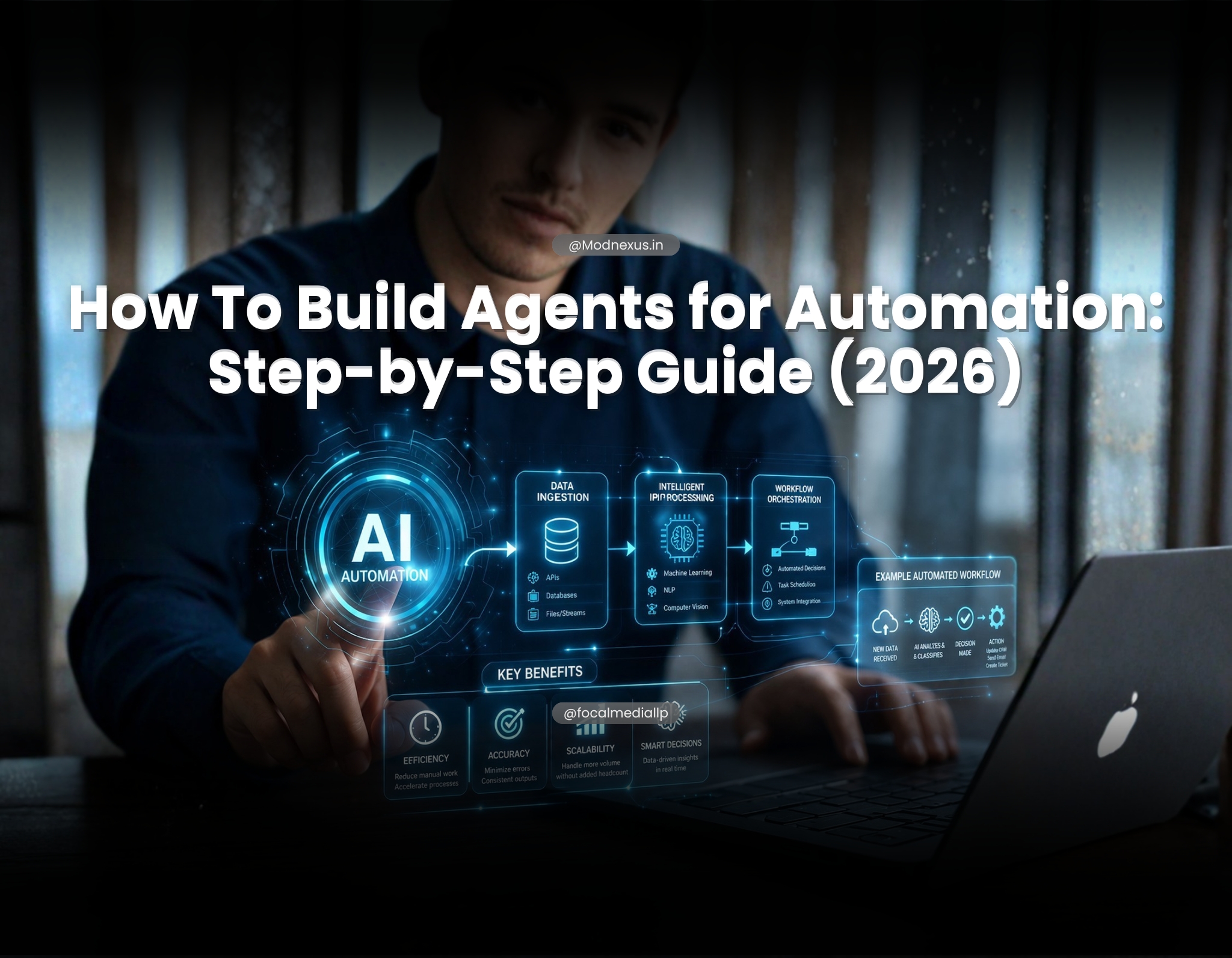


Automation is entering a new phase in which systems are no longer just reactive; they are intelligent, adaptive, and proactive. Businesses are rapidly shifting from traditional automation tools to AI Agents that can think, act, and improve over time. This transformation is redefining how companies operate, compete, and scale in a digital-first world.
As organizations aim to improve efficiency and reduce costs, AI Agents are becoming a central part of business strategy. From customer support to operations and decision-making, these systems are unlocking new levels of productivity and innovation.
The Shift from Automation to Intelligence
Traditional automation focuses on predefined rules and workflows. While effective for simple tasks, it lacks flexibility. AI Agents bring intelligence into automation by understanding context, learning from data, and making decisions in real time.
This shift allows businesses to move beyond repetitive task automation and embrace systems that can handle complex processes with minimal human input.
Key Trends Shaping AI Agents in 2026
The future of AI Agents is being driven by several emerging trends:
- Increased adoption across industries
- Integration with enterprise systems
- Growth of no-code and low-code platforms
- Improved natural language understanding
These trends are making it easier for businesses to adopt intelligent automation at scale.
Rise of Multi-Agent Systems
One of the most important developments is the rise of multi-agent systems. Instead of a single system handling tasks, multiple AI Agents collaborate to solve complex problems.
For example, one agent may gather data, another analyzes it, and a third executes actions. This collaborative approach improves efficiency and enables more advanced automation.
Tools Powering the Future of AI Agents
A growing ecosystem of tools is supporting the development and deployment of the AI Agent. These include:
- No-code platforms for quick deployment
- Developer frameworks for customization
- Enterprise solutions for large-scale automation
These tools allow businesses to build, test, and scale solutions based on their specific needs.
Real-Time Decision Making
Speed is a major advantage in modern business environments. AI Agents enable real-time decision-making by analyzing data instantly and taking action.
This capability is especially valuable in areas like customer support, fraud detection, and supply chain management, where delays can lead to losses.
Personalization at Scale
Customers expect personalized experiences across digital platforms. Delivering this manually is not practical.
AI Agents make it possible to personalize interactions for thousands of users simultaneously. From product recommendations to tailored communication, they enhance engagement and improve customer satisfaction.
Expanding Use Cases Across Industries
The use of AI Agents is expanding beyond traditional sectors. Key industries benefiting from these systems include:
- E-commerce for personalization and support
- Healthcare for diagnostics and operations
- Finance for fraud detection and automation
- HR for recruitment and employee support
This widespread adoption highlights their versatility and impact.
Improving Operational Efficiency
Efficiency remains a top priority for businesses. AI Agents streamline workflows by automating repetitive tasks and reducing manual intervention.
This leads to faster processes, fewer errors, and better resource utilization, helping organizations operate more effectively.
Enhancing Human-AI Collaboration
The future is not about replacing humans but enhancing their capabilities. AI Agents work alongside teams to handle routine tasks while humans focus on strategy and creativity.
This collaboration improves productivity and allows businesses to achieve better outcomes.
Challenges and Considerations
While the benefits are significant, businesses must address challenges such as data quality, system integration, and user adoption.
Proper planning and implementation ensure that AI Agents deliver consistent and reliable results.
Growth Opportunities for Businesses
The adoption of AI Agents opens up new growth opportunities:
- Expanding services without increasing costs
- Improving customer experience
- Accelerating innovation
- Gaining a competitive advantage
Businesses that invest in intelligent automation early will be better positioned for future growth.
Preparing for the Future
To stay competitive, organizations should start exploring how AI Agents can fit into their operations. Identifying high-impact areas and implementing solutions gradually ensures successful adoption.
Continuous monitoring and optimization will help businesses maximize the value of these systems.
Conclusion
The future of automation is intelligent, adaptive, and scalable. AI Agents are at the center of this transformation, enabling businesses to operate more efficiently and respond quickly to changing demands.
At ModNexus, we help organizations leverage AI Agents to unlock new opportunities, streamline workflows, and drive sustainable growth. As technology continues to evolve, businesses that embrace intelligent automation will lead the way in innovation and performance.